Early Childhood Learning Environments: Preschool, Pre-K & Transitional Kindergarten
By: VS America
“The goal of early childhood education should be to activate the child’s own natural desire to learn.”
– Maria Montessori
Intentional Learning Environments Nurture Play, Communication & Skill Development
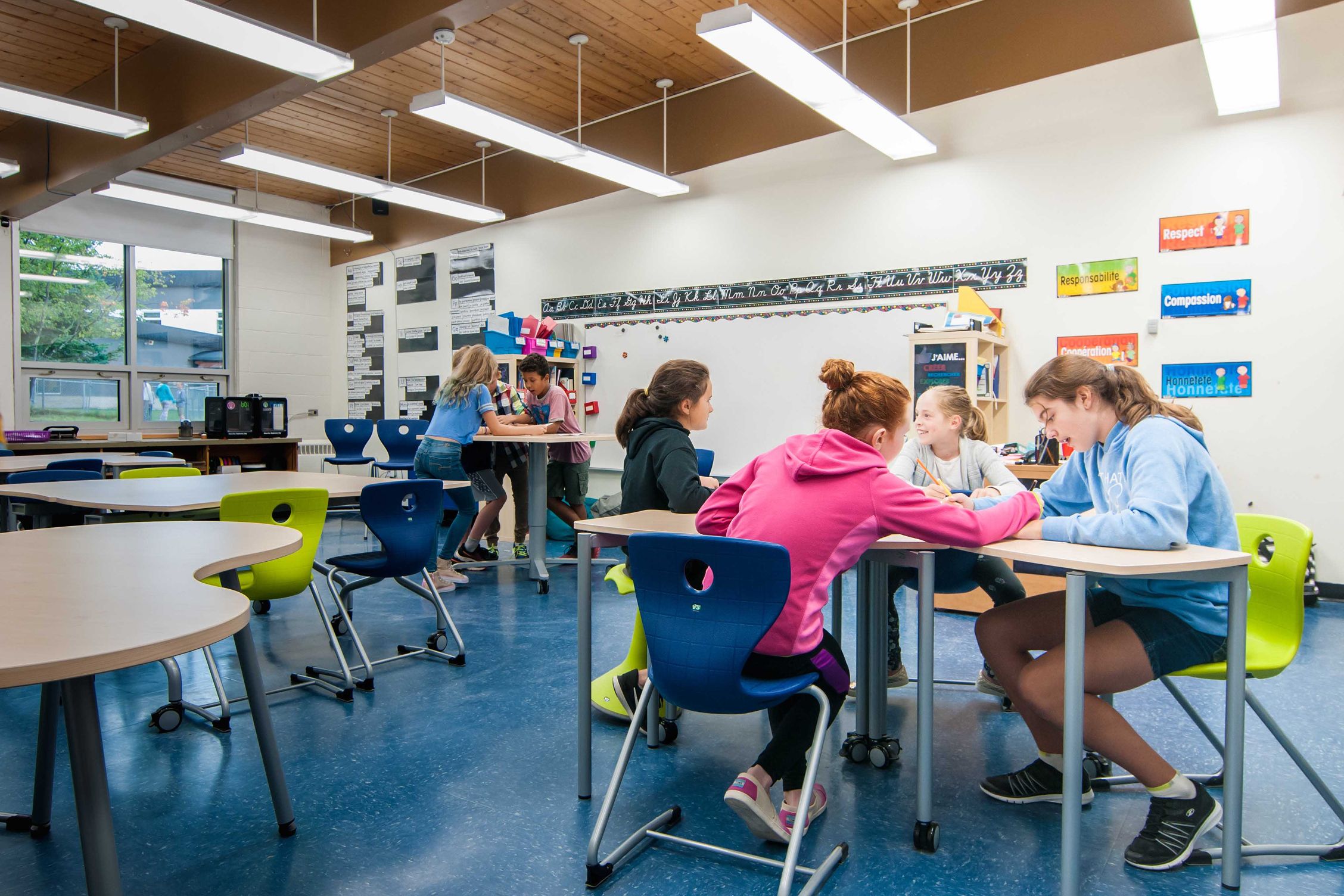
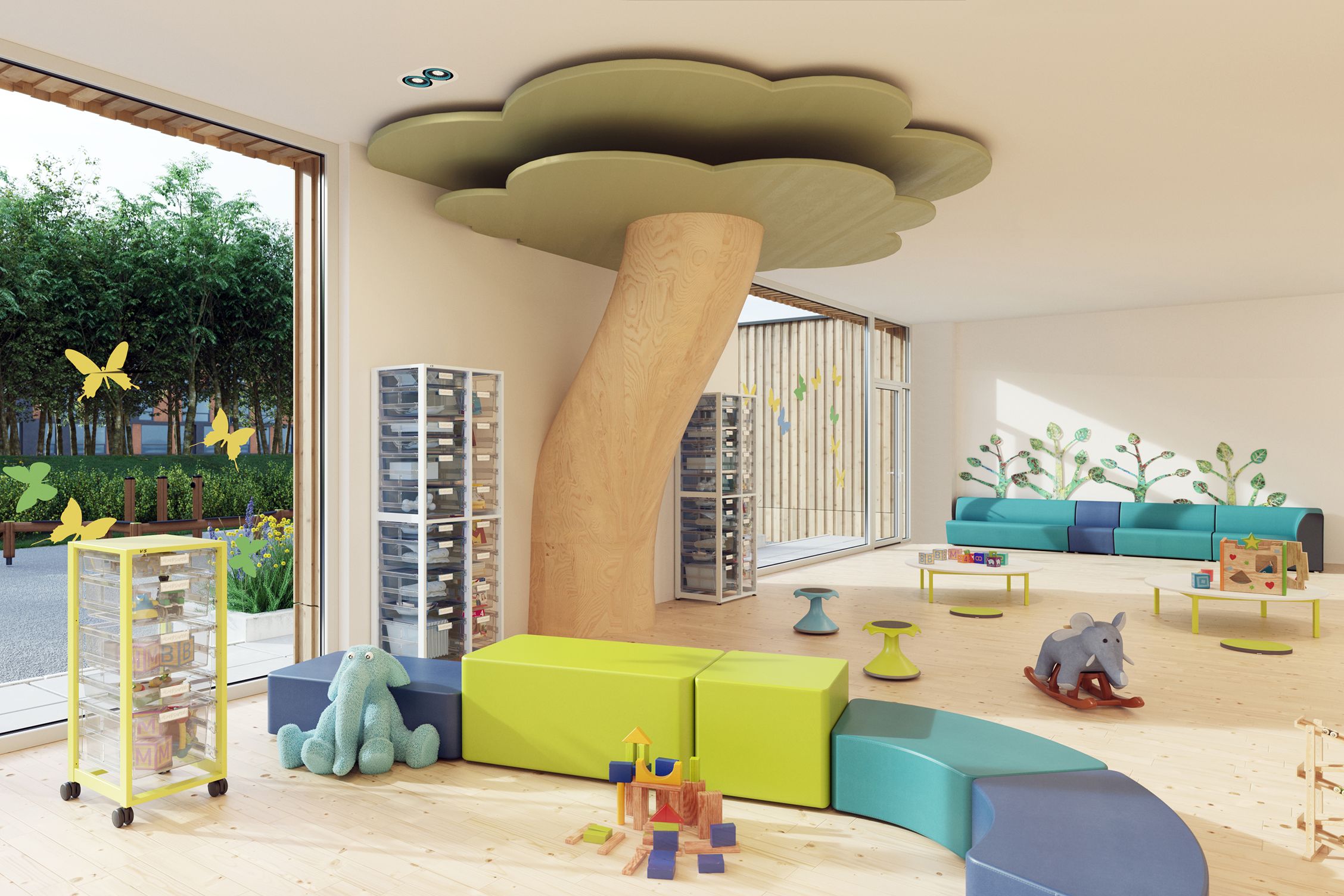
When young learners enter into preschool, pre-k, or transitional kindergarten (TK), it’s important to have an inviting and inclusive learning environment. These spaces can be defined by intentional furnishings and areas of activity determined by the furniture layout. VS offers a unique furniture system that supports play, early literacy experiences, cognitive and physical skill development, and the health and well-being of young learners.
Warm and inviting spaces allow children to be explorers, opening the way to lifelong learning. During play, young learners explore, experiment, wander, socialize, and are constantly on the move.
Versatile early childhood learning environments allow teachers to orchestrate organized and manageable spaces where all children move freely between learning areas and readily participate in and self-select activities.
Hands-On Learning
An experiential environment is a living, changing system guided by student interest. More than the setup of physical space, experimenting with hands-on activities gives kids a chance to engage multiple senses.
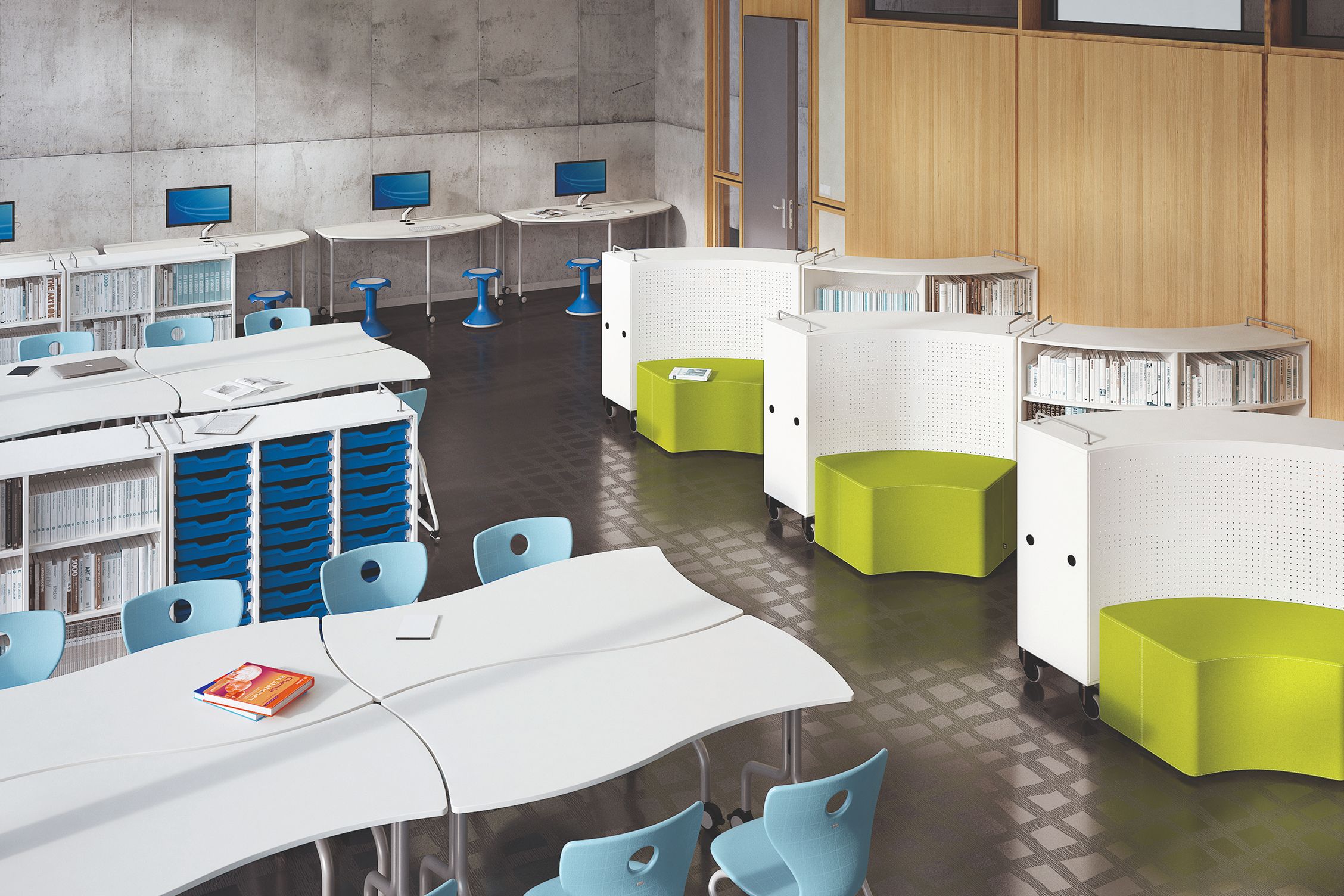
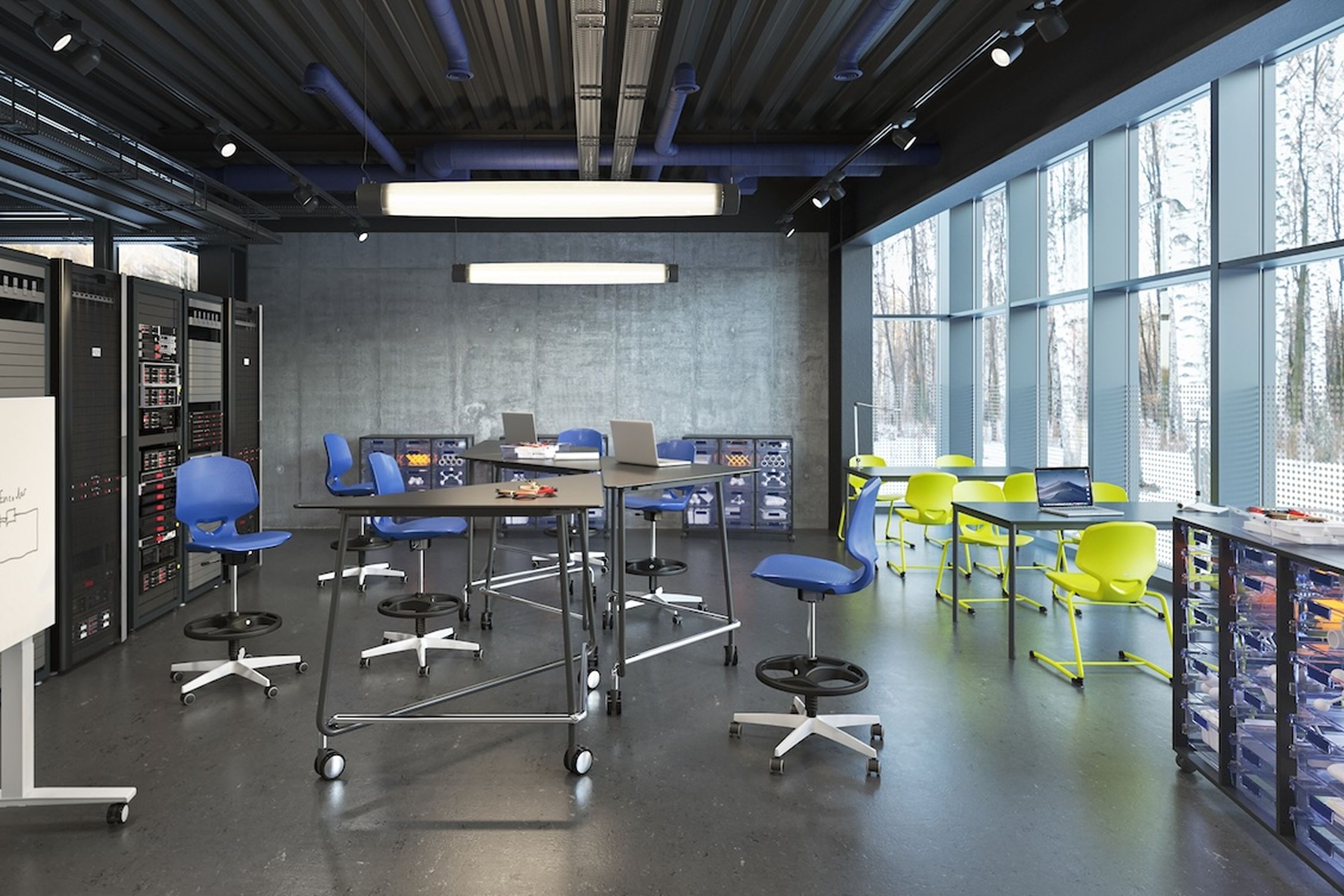
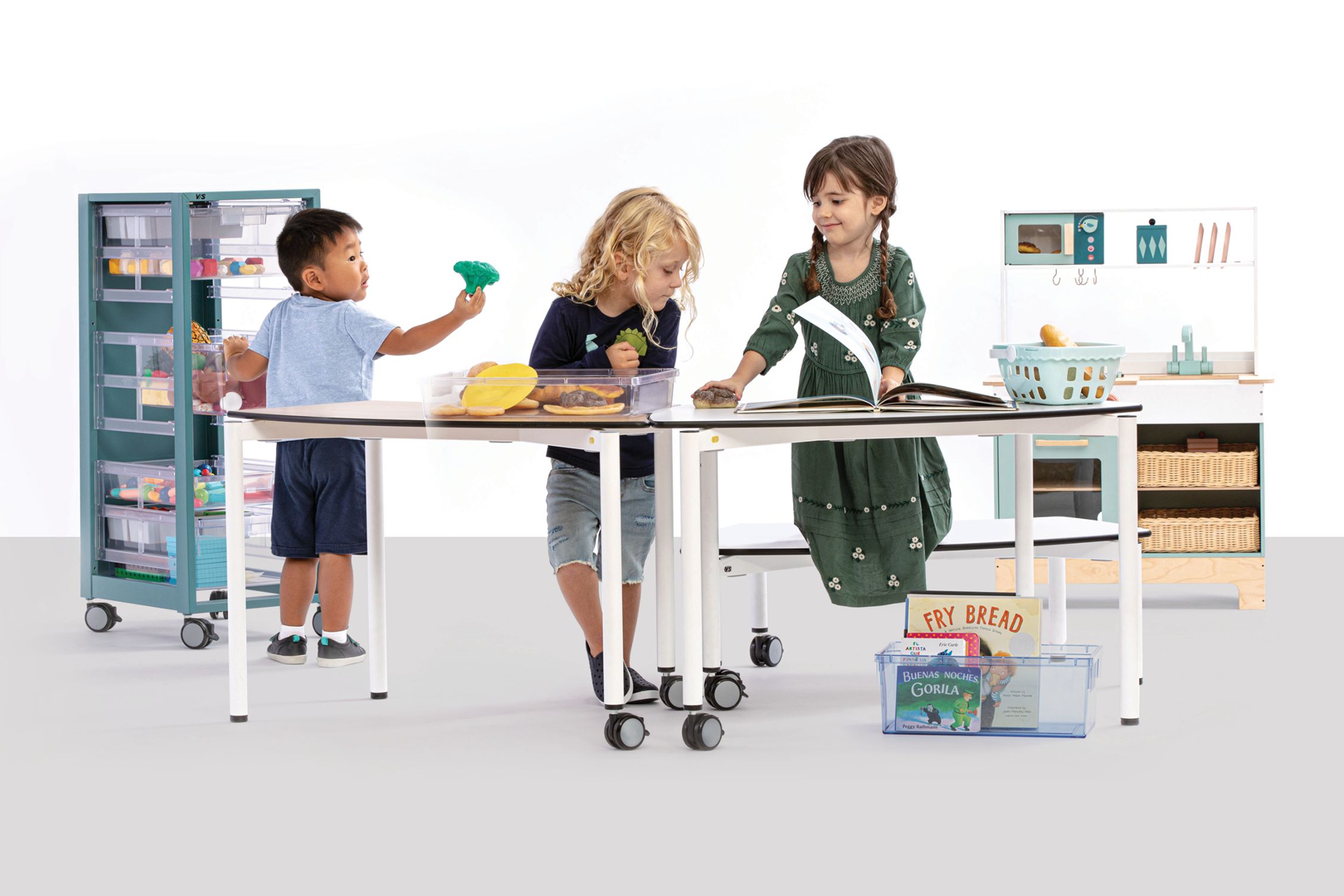
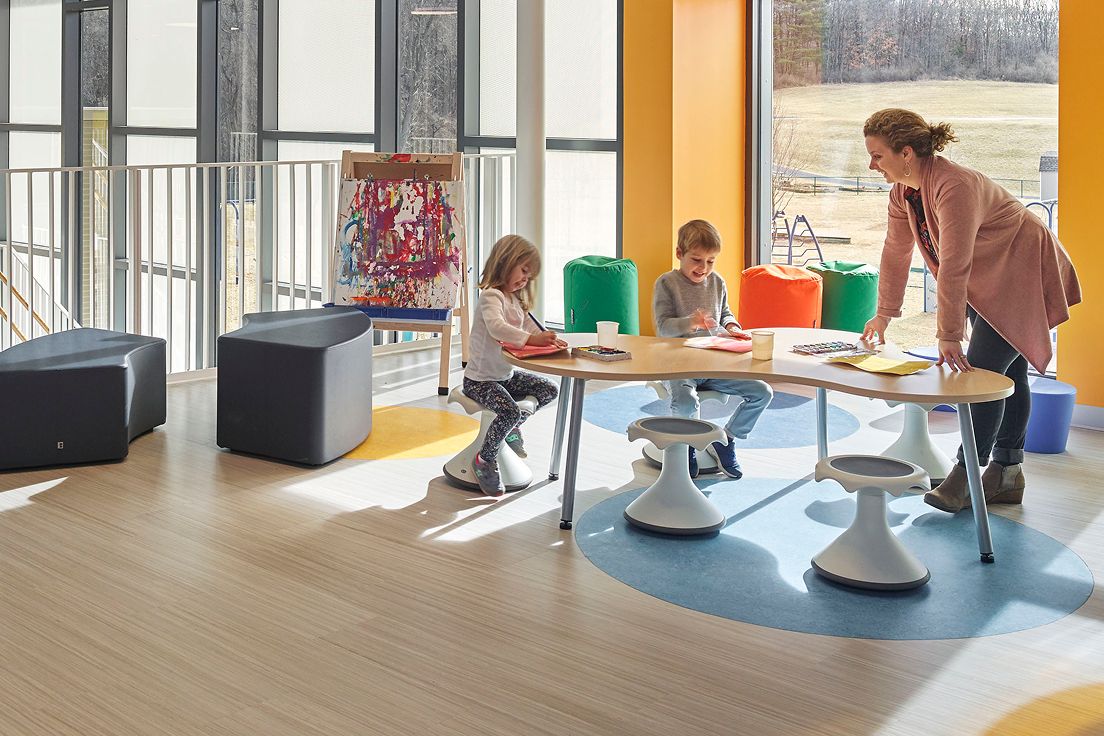
Scalable, mobile, and easily cleaned tables and chairs make experimenting a snap. With various surfaces and agile, transparent storage with items for young learners located at eye level, you can turn your spaces from a lab to a lunchroom or to an outer space house of hay and bricks in seconds.
When children experience meaningful experimentation they connect through play, imagination, curiosity, and language. They have the chance to learn and work at their own pace and interest levels.
Developing Spatial Intelligence Through Space Interaction
The flexibility of stackable tables and chairs means learning environments can instantly transform to free up space for young learners to meander freely with reduced runways. These interactions provide opportunities to develop cognitive age-appropriate processing skills as they self-select places for structured and unstructured play.
Children seek adventure. The physical environment supports innate curiosity, playing, swaying, and meandering – and testing their abilities develops young learners’ sense of place as it builds independence and supports self-regulation.
Child-Friendly Play & Learning Spaces
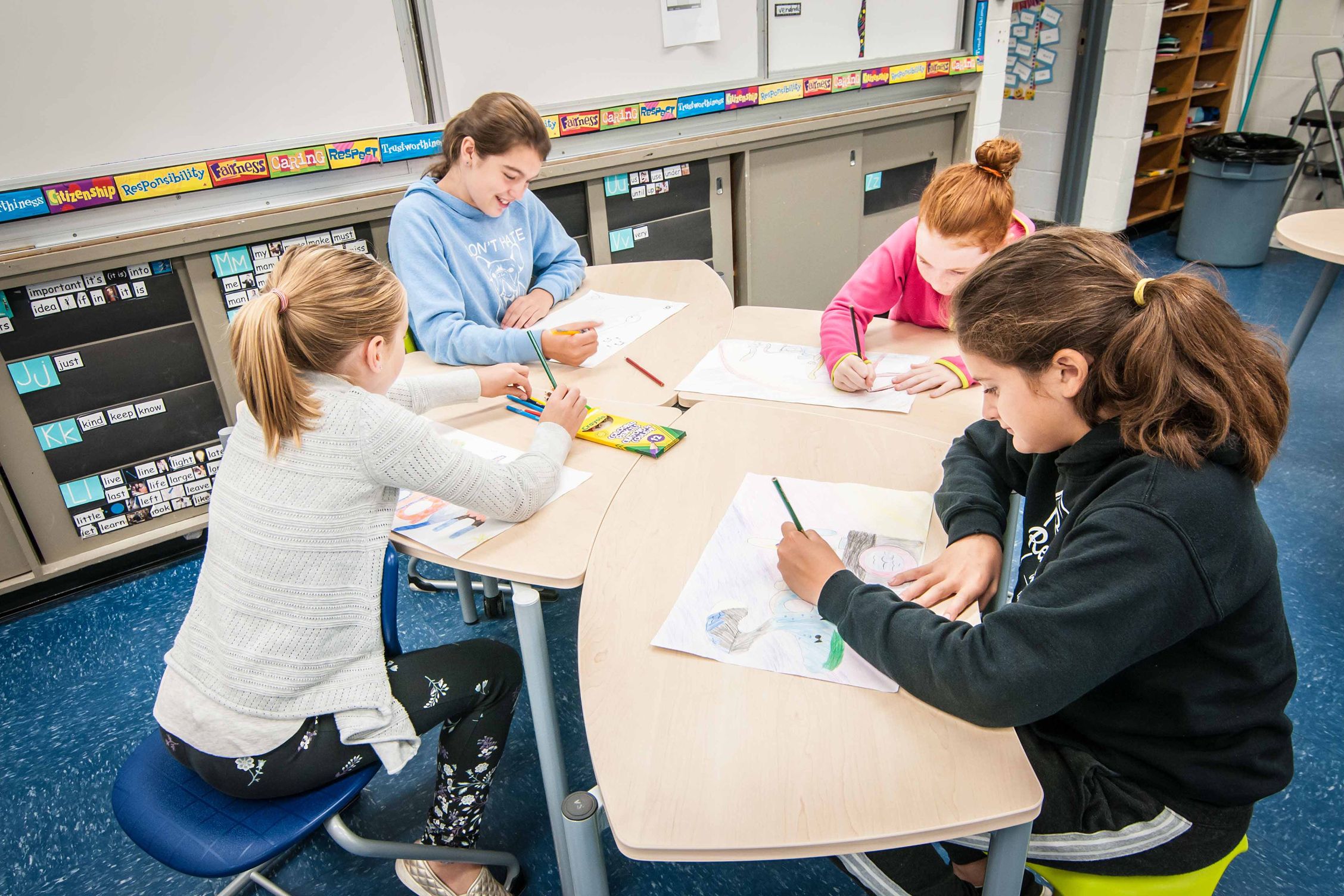
Play is synonymous with learning. The process of learning is built on a child’s natural curiosity and ability to explore. It is during playful exploration that children learn early academic and social-emotional skills. Play is about having autonomy as to where and how learning happens.
Early learners benefit from play because it fosters flexible and higher-level thinking processes, as well as supports communication, which is linked to vocabulary and word structure processes.
Early learning educators curate play-based learning, so learners are able to explore academics naturally through a combination of self-guided and guided play, which weaves in early literacy and numeracy skills.
Designing for Needs-Based & Development-Promoting Physical Activities
Creating learning spaces where students and teachers truly want to be is the ultimate goal. A place where young learners happily play and learn, and teachers teach with enthusiasm.
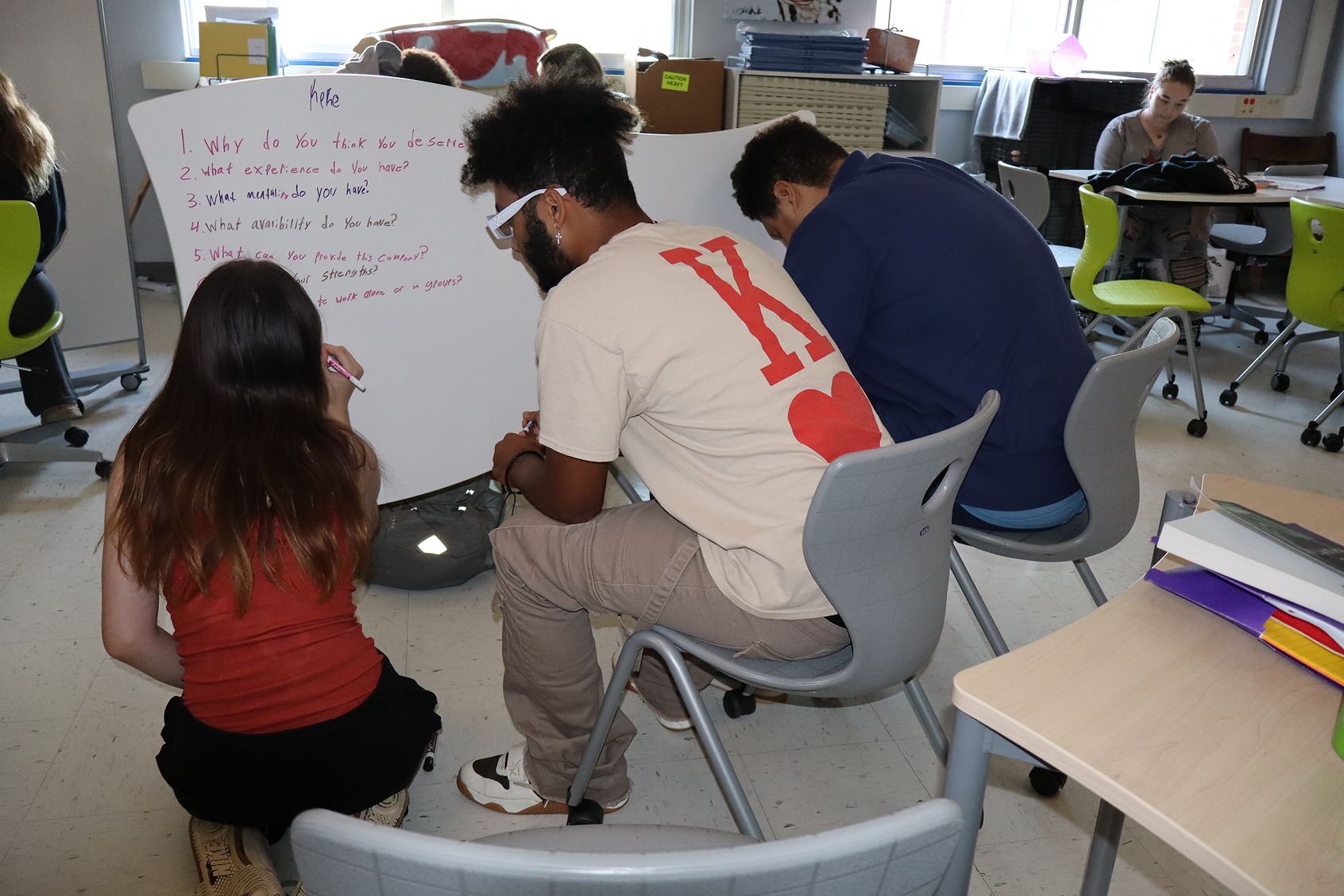
The freedom to choose personal and situational comfort sets the stage for developing agency in the learning environment. Agile furniture contributes to this individual freedom of choice. In these spaces, children can choose the types of spaces and furnishings that best support them with each specific activity. This allows them to feel empowered and inventive.
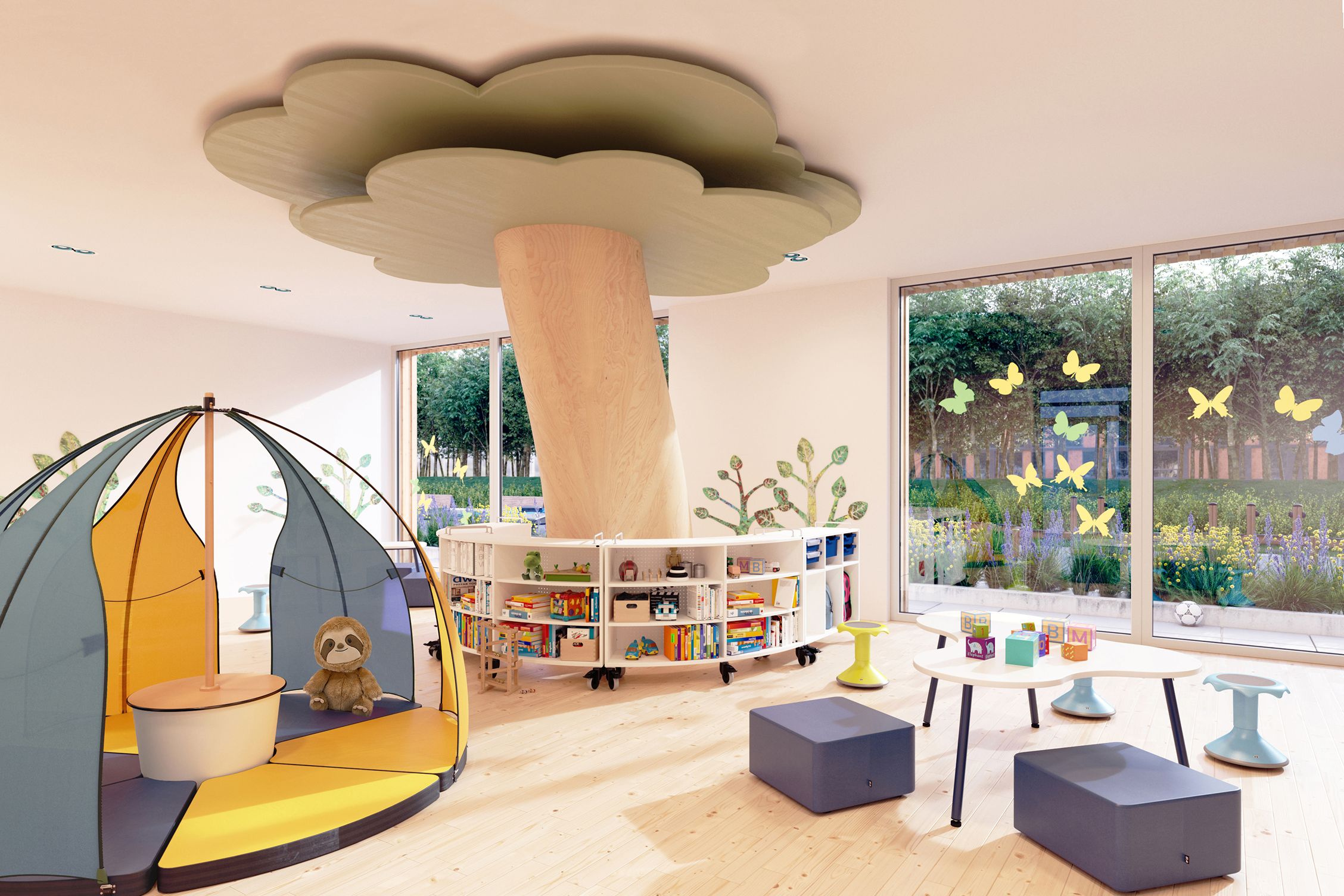
Retreat Spaces for Quiet, Reflection & Play
Learning space geography supports all personalities, activities, and temperaments.
Young learners are simultaneously successful at independent and interdependent tasks and need places to balance all of the emotions that go along with their day.
Teachers support young learners with a variety of play opportunities so they can naturally self-advocate for independent tasks.
Related VS Resources
Learn more about creating intentional preschool, pre-k, and TK learning spaces below.
Explore More Blogs